
Hardware · Made with Inpro
TAG-X® Smart Rail
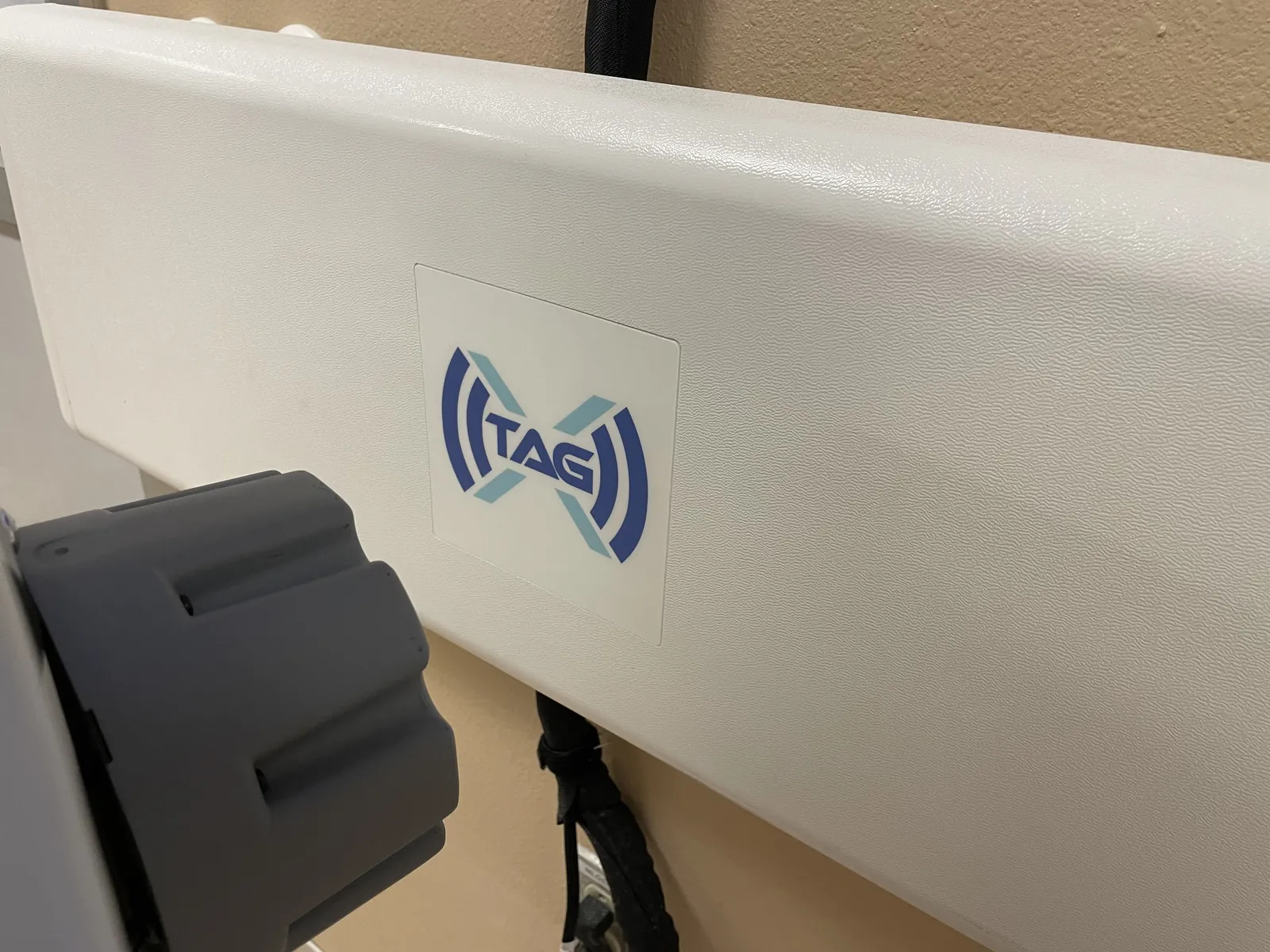
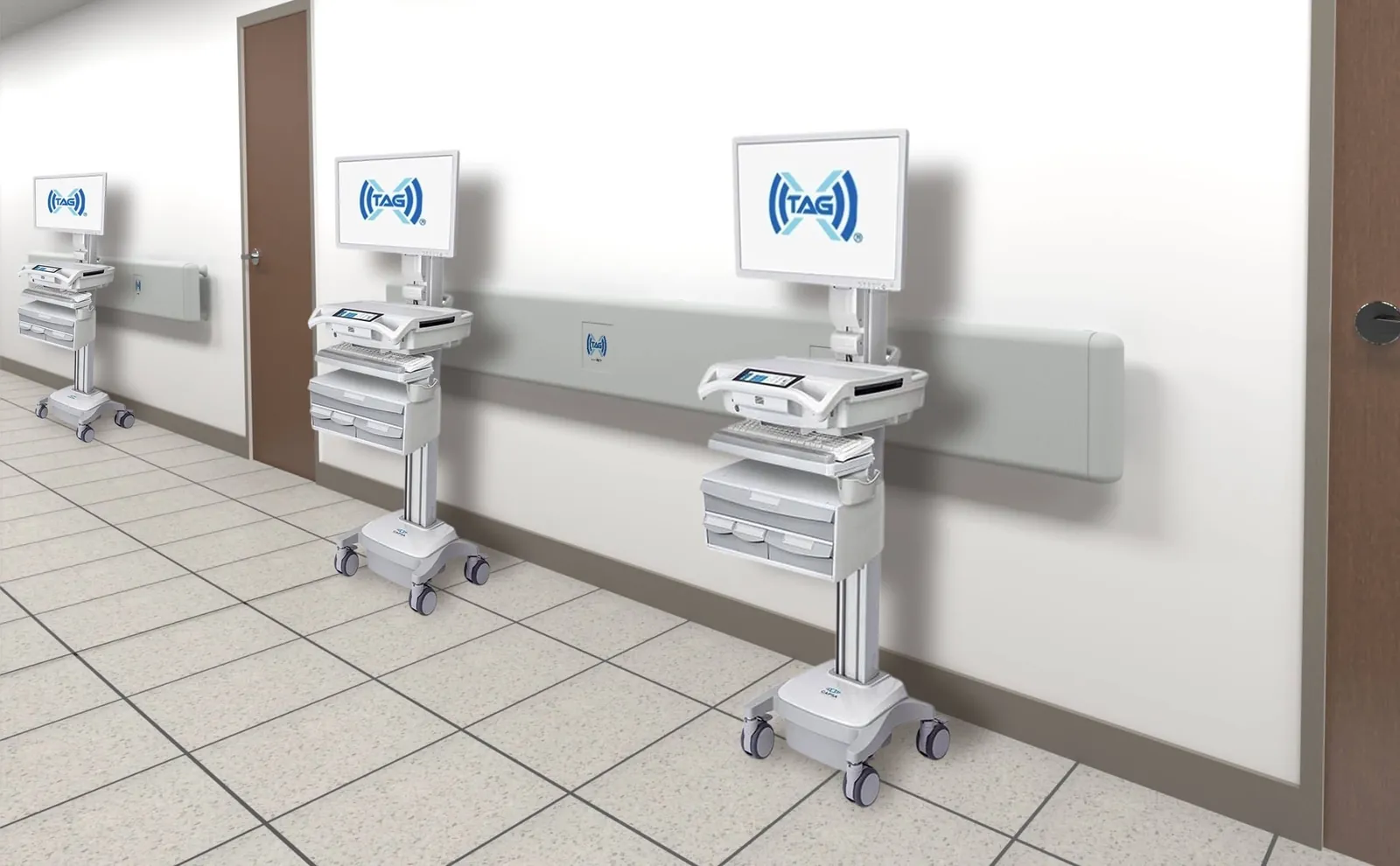
Wireless, contactless charging inside hospital wall protection. Nurses “tag” the cart to the wall where X marks the spot, and it charges.
Charging that happens when you park
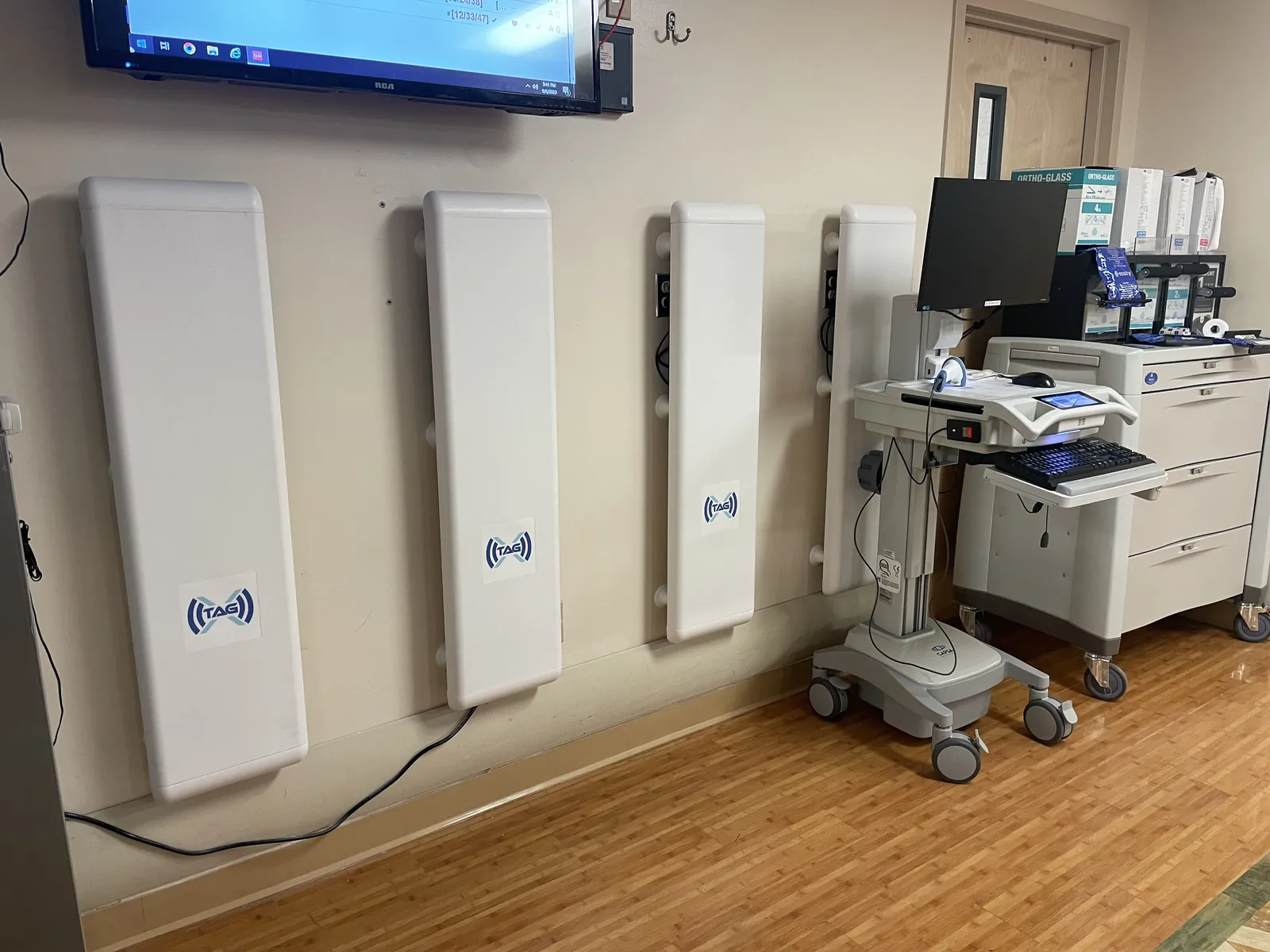
TAGCarts and Inpro, the wall protection maker, launched the TAG-X Smart Rail together. It looks and works like the guards and rails already lining hospital corridors, rated for more than 1,000 lb of impact, with charging transmitters inside. One technology protects the other.
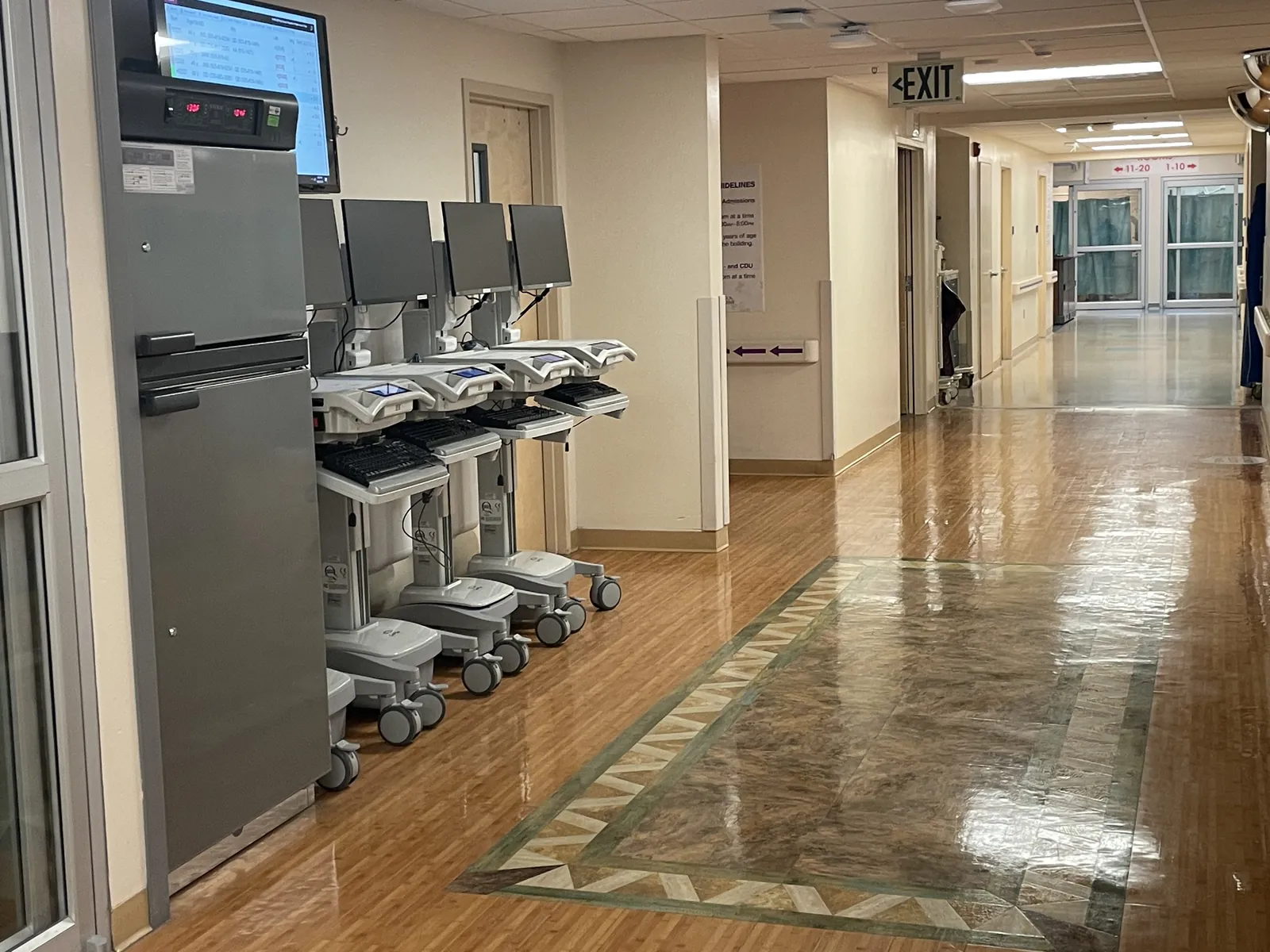
When a cart or piece of mobile medical equipment is parked against the rail, it charges. There is no plug, no contact and nothing for a nurse to remember. Charging works best when the receiver on the cart and the transmitter in the rail are within 7.5 cm (3 inches).
The name says how it works: nurses “tag” the cart to the wall where X marks the spot.
The technology
Chosen for patient care areas
A multi-year study of charging technologies led TAGCarts to a proven low-frequency resonant magnetic (MR) technology, the same one charging tens of thousands of drones and autonomous ground vehicles around the world. The research rated it the safest for patient care areas and far more forgiving of angle and misalignment than the alternatives.
Future workflows beyond charging, which we call “Apps”, will be added as hospitals ask for them, upgraded through NexTAG and downloaded to the rails’ firmware.
What it does for a unit
- Charges every medical cart and piece of mobile medical equipment, wirelessly
- Removes hazardous cords and costly swappable battery systems
- Cuts touch points, cross-contamination and the work of wiping cords
- Saves nurses bending down to plug and unplug heavy carts
- Keeps carts charged and ready, so care is not delayed
Product details
Specification
- Charging
- Wireless, contactless; resonant magnetic, low frequency; best within 7.5 cm (3 in)
- Retainer
- Continuous aluminum retainer, .080 in (2 mm) thick
- Cover
- Rigid vinyl, .080 in (2 mm) thick, scratch and stain resistant; unplasticized PVC
- Impact
- Wall protection rated for more than 1,000 lb of impact
- Modules
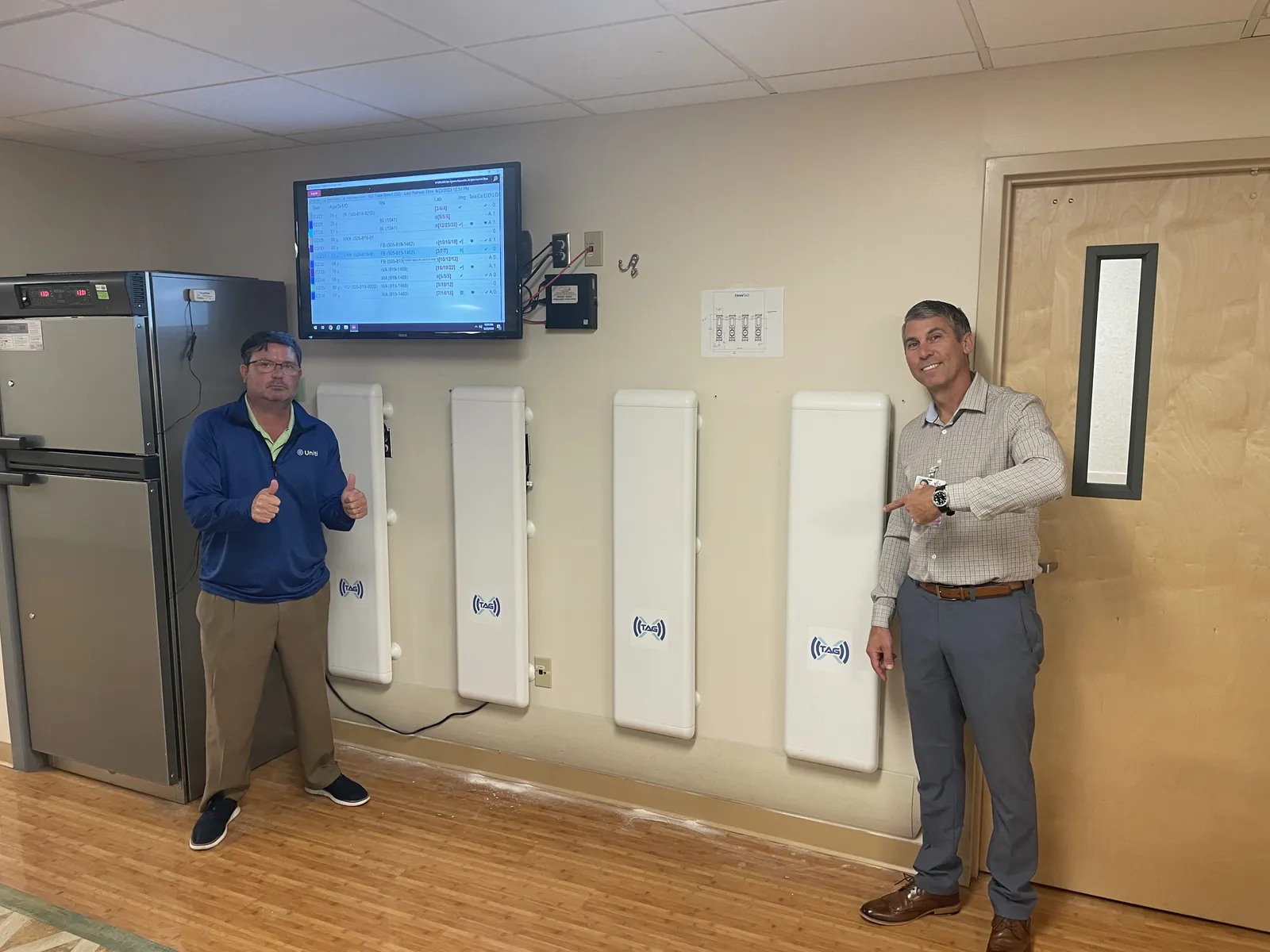
- 42 in (1.06 m) standard modules that stack to suit any wall length
- Mounting
- Horizontal along a wall, or vertical where wall space is limited; mounting fasteners included; recommended height no more than 26 in from the finished floor (ADA)
- Upgrade kits
- Turn existing hospital guards and rails into TAG-X Smart Rails
- Software
- Every rail reports to NexTAG
Downloads
From the floor
What nurses and physicians say
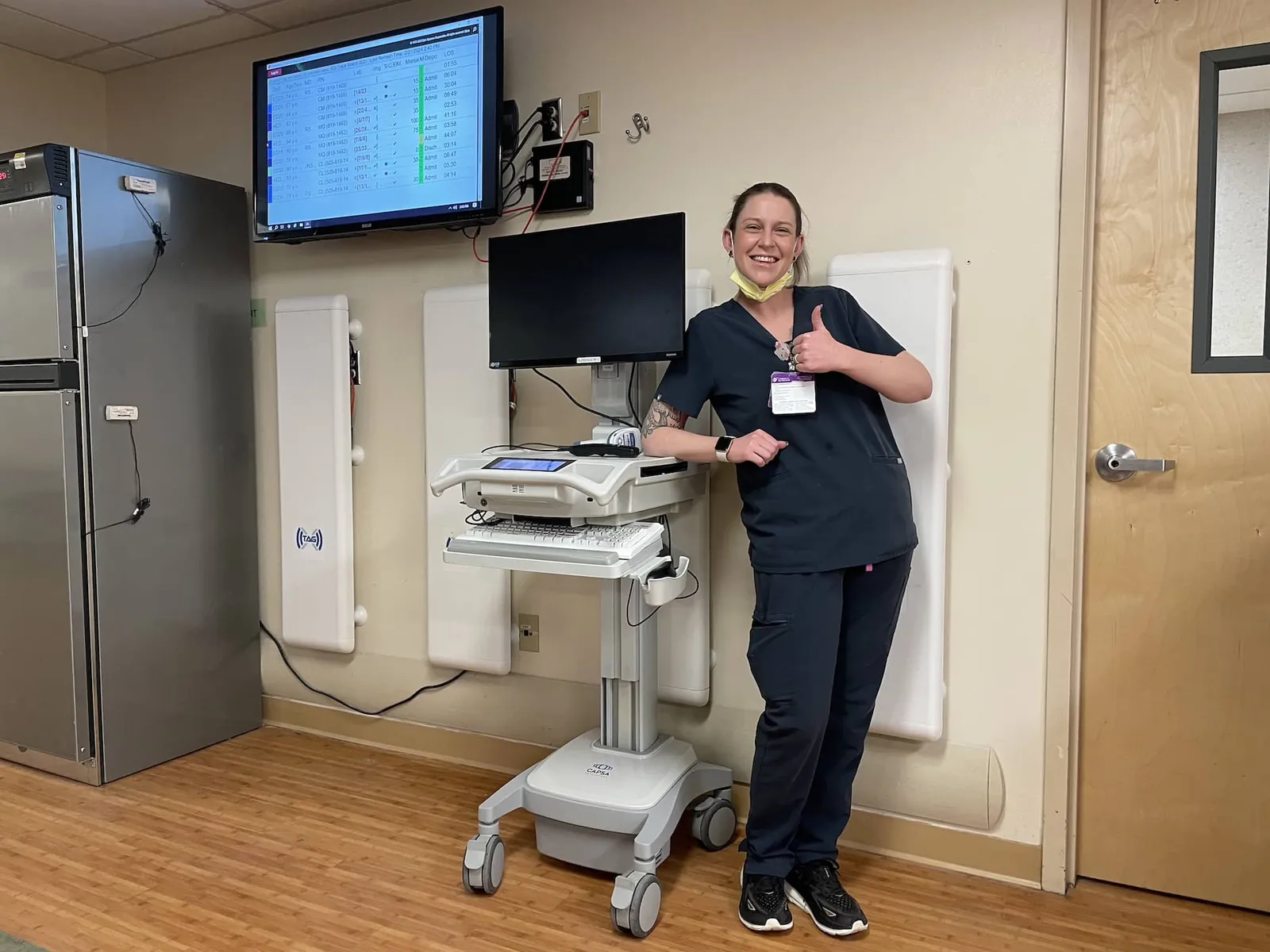
Love the TAG-X wireless charging! I seek the TAGCarts out over the old corded carts because they’re just easier and make my workflow smoother. If anything I’d love to have more locations for charging.
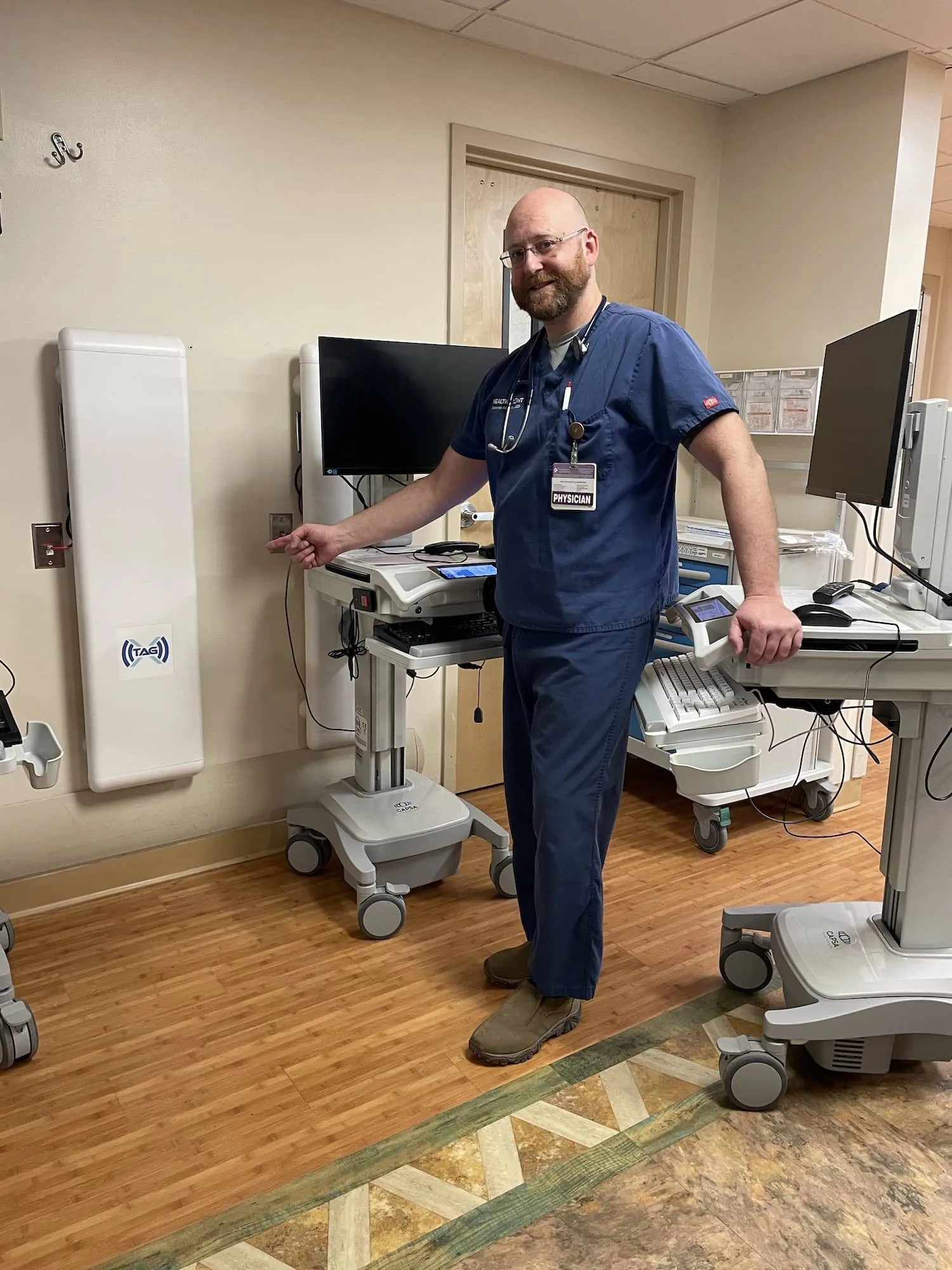
The wireless charging WOWs are superior to corded or desktop workstations, not only because of the mobility and fast response, but the ease and speed of parking the WOW for charging.
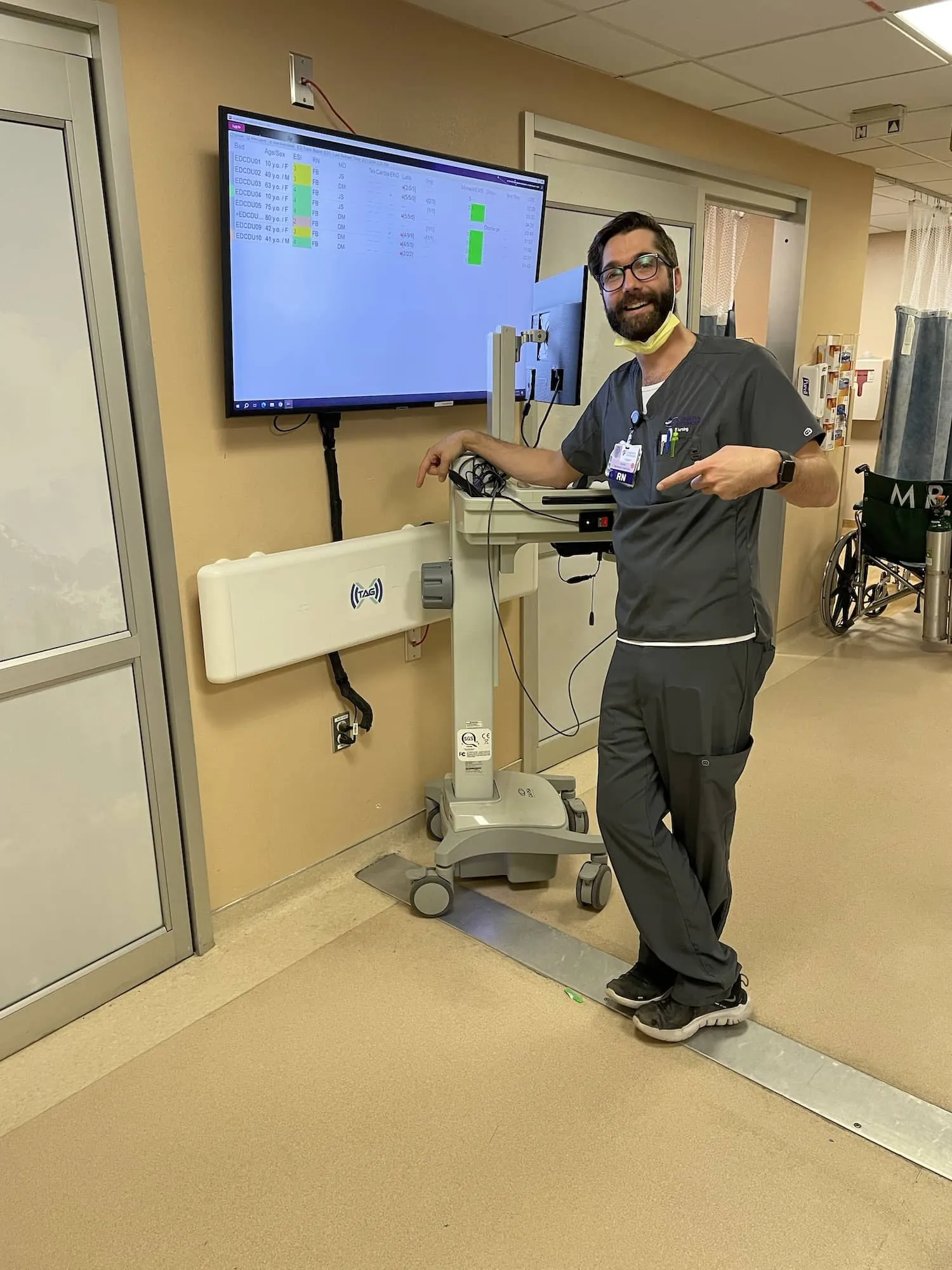
Reliable, convenient, easy to use, and saves my back!
See TAG-X working
We can show you the Smart Rail in person or online, and plan where rails would go on your units.